
Can Tech Really Nudge You to Focus? I Tried It.
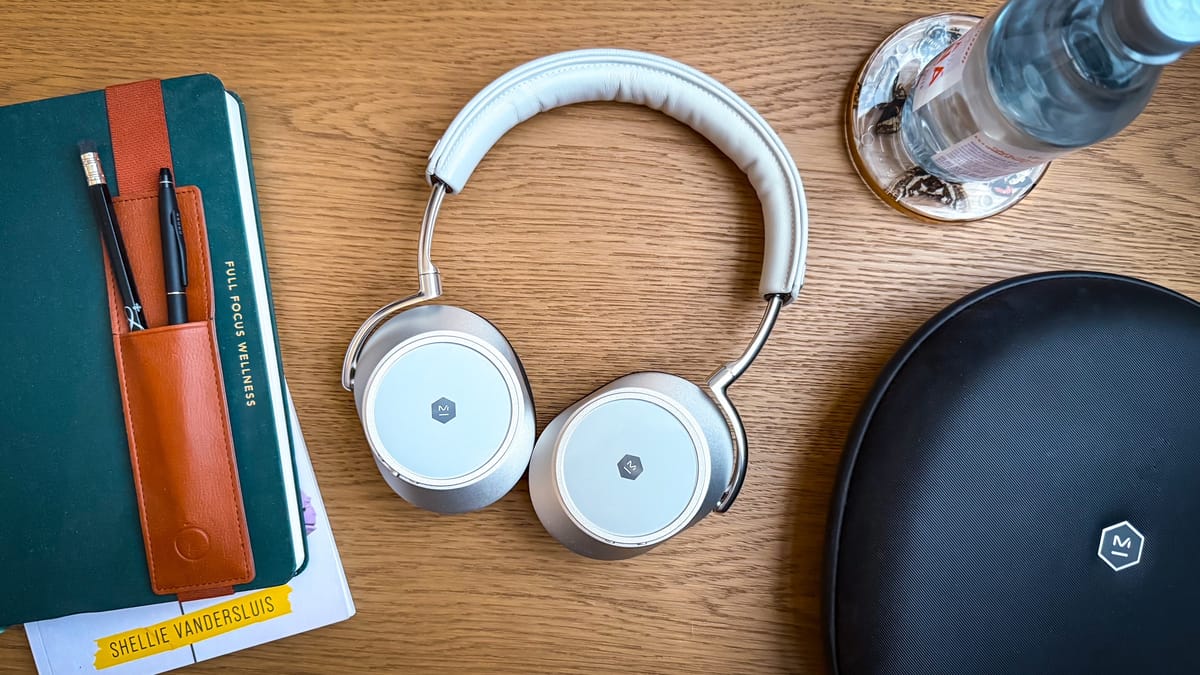
I didn’t need another gadget promising to “fix” my focus, but curiosity won. So I’ve been wearing brain-tracking headphones… while writing, leading Zoom calls, walking my dog, and even at the gym.
What These Headphones Actually Do
The MW75 Neuro are some excellent noise-canceling headphones. Both the sound quality and noise cancellation are fantastic. Neurable’s EEG sensors are hidden inside the ear cushions. There are sensors embedded in the padding that pick up tiny electrical signals from your brain and muscles.
Those raw signals are noisy, so Neurable runs them through signal-processing algorithms and machine learning to translate them into a few simple readings:
- Focus: how engaged you appear to be with your task
- Strain: when your effort is climbing too high to be sustainable
- Fatigue: when your brain is sliding into exhaustion
Think of it as a weather forecast for your attention. It doesn’t know what you’re thinking, but it can tell if your mental “skies” are clear, cloudy, or about to storm.
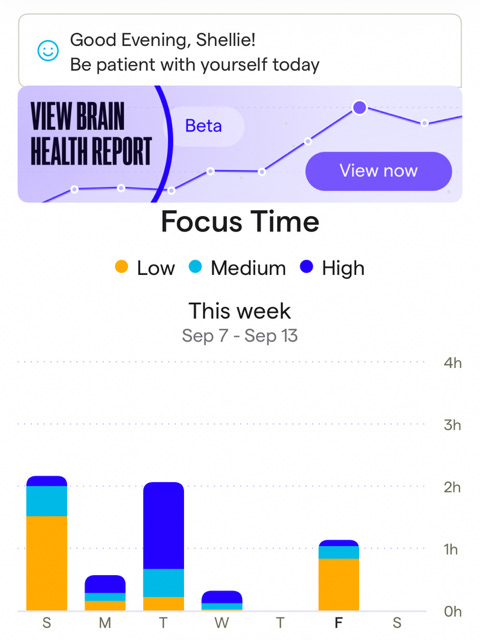
The app adds extra support: logging focus sessions, comparing days, and nudging you when your patterns show you’re slipping. Sometimes the notification literally says, “You deserve a brain break.” It’s oddly comforting… more like encouragement than nagging. That small reminder has become one of my favorite features.
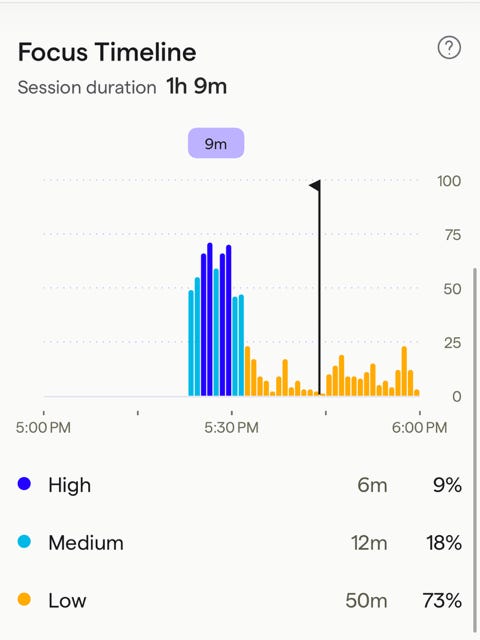
Neurable claims the headset can store 16 hours of brain data offline before syncing with the app, and battery life with all features on (EEG + active noise canceling) runs around 8 hours. In my use, I definitely got close to that, but charging also became part of my routine.
Why They Can Be Helpful
Most of us power through the day on autopilot until we crash. These headphones gave me something I rarely give myself: permission to pause. A quick nudge comes at the exact moment I would’ve slipped into distraction, and a short break often saves me so much more time later.
The noise canceling also mattered more than I expected. By cutting down on background clutter, it made the “focus data” less about my environment and more about me.
What I Learned
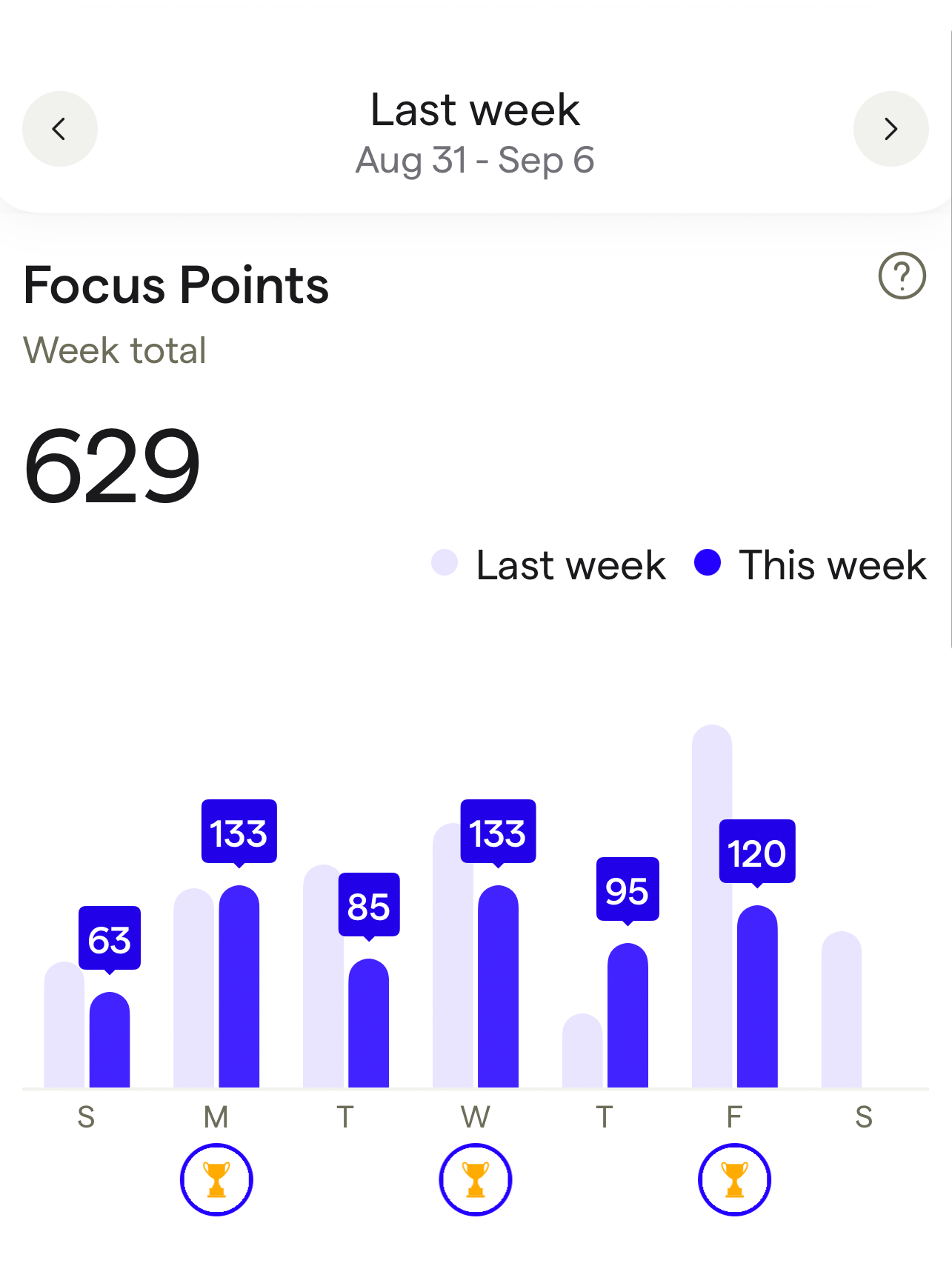
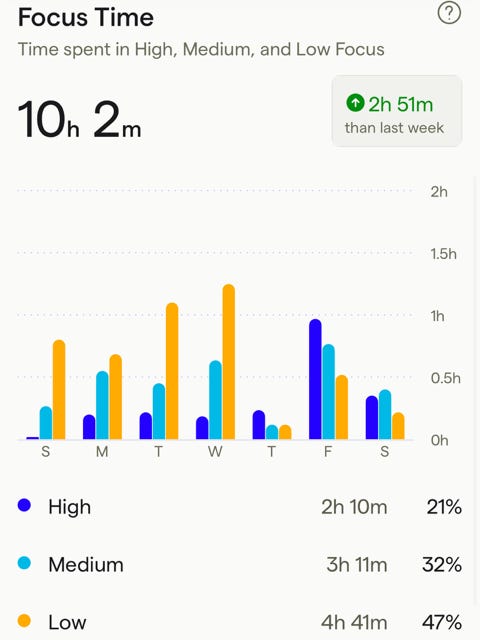
The biggest surprise was how much patterns mattered more than single scores.
Here’s what stood out:
- I work best in 30–50 minute bursts, not long marathons. (Good to know, since I often try to push for much longer.)
- Breaks gave me more clarity than caffeine. (I still want the caffeine.)
- My evenings were often more productive than my mornings (something I suspected, but now I could see it).
And yes, I kept going partly because of the streak badge. Silly or not, it pushed me to be consistent.

The Limits
The headset won’t solve focus problems on its own, and it’s not magic tech. If you treat it like a scoreboard, you’ll just get frustrated. If the fit isn’t right, the data gets messy. And no gadget will replace good sleep, food, and pacing yourself. Also, the app doesn’t sugarcoat things, so if hearing that you were unfocused will discourage you, that’s something to consider.
For transparency: I’m not affiliated with Neurable or Master & Dynamic. These reflections are entirely based on my own experiences.
Why I Keep Using Them
For me, this is a tool that quietly supports better habits. It didn’t transform my brain, but it did help me work with more rhythm and less burnout.
The best part? It made me more aware of how I feel in the moment. Instead of grinding until I crash, I started paying attention to the cues my brain was already sending… and then honoring those cues.
That’s not about chasing a perfect focus score. It’s really more about building a way of working that feels steady and sustainable, which has been a huge goal of mine.
Questions to Ask Yourself
If you’re thinking about trying brain-tracking headphones, ask yourself:
- Am I curious enough to experiment with my work habits, or will the numbers just stress me out?
- Would gentle nudges to rest help me, or do I already pace myself well?
- Am I okay with some setup quirks (fit, calibration, occasional app glitches)?
- Do I want insights over time, or am I expecting instant transformation?
If you’re hoping for mind-reading or instant productivity gains, you’ll be disappointed. If most of your answers lean toward curiosity, experimentation, and gentle support, this might be worth it for you, too.
What I hope for myself (and for you, if you try this) is this: tech that fades into the background, nudging you only when it matters, and helping you respect your energy without guilt. That’s not hype. That’s what I’ve started seeing.